A spine fractured in a fall from height or a road accident is serious because the spinal cord and nerves run inside it. At Medifirst Hospital, Dr. Kumar Vishal treats complex back (thoracolumbar) spine fractures — bracing or spinal fixation — with the neurosurgery team alongside for any cord or nerve injury.
Medically reviewed by Dr. Kumar Vishal
Pride of Jharkhand 2025
Dr. Kumar VishalSpine & trauma surgery · Medifirst Hospital
Thirteen years of trauma, joint and sports surgery — and patients who walk out of it.
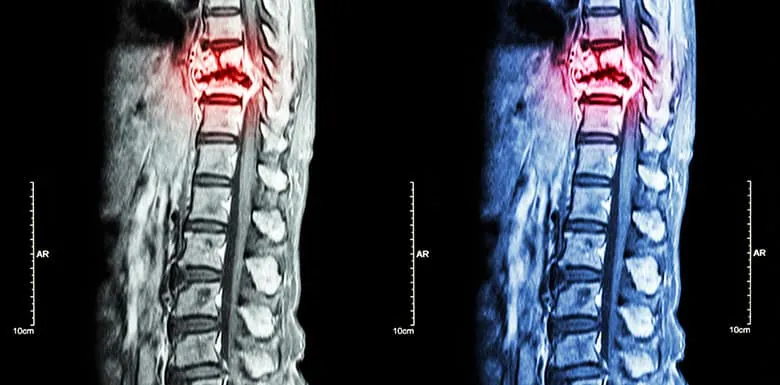
A complex spine fracture after an accident is a broken vertebra in the back (thoracolumbar spine) that is burst, displaced, or unstable — often from a fall from height or a road crash. The danger is the spinal cord and nerves that run through it. A CT and MRI decide whether it is stable (treated in a brace) or unstable (needing spinal fixation surgery). Any leg weakness, numbness, or loss of bladder/bowel control is an emergency and is managed with the neurosurgery team.
The spine is a stack of vertebrae protecting the spinal cord. In a high-energy accident a vertebra can be crushed into a wedge (compression), shattered outward (a burst fracture), or shifted out of line (a fracture-dislocation). What matters is two things: is the spine stable enough to hold together, and is the cord or nerves injured or at risk.
A stable fracture with no nerve injury is often treated without surgery, in a brace. An unstable fracture, or one pressing on the cord or nerves, usually needs surgery to realign and fix the spine and take pressure off the nerves. Getting this judgement right is why a spine fracture belongs in a trauma hospital with imaging and a surgeon who treats spines — not a clinic.

A spine fracture that threatens the cord needs imaging, a spine surgeon and a neuro team fast — and often comes with other injuries. At Medifirst these work under one roof. Dr. Vishal leads the bony spine and limb fractures; the neurosurgery team leads any spinal-cord injury — one coordinated plan.
One place, one coordinated plan — the family is not shifting a spine-injured patient between hospitals during the hours that matter most.
Back pain after an accident always needs a check. But these signs mean possible cord or nerve injury — do not move the patient more than necessary and reach an emergency department now.
If a back injury after an accident comes with leg weakness, numbness, or loss of bladder or bowel control, the spinal cord or nerves may be injured. Do not move the patient more than necessary — keep the spine in line, and call an ambulance to reach an emergency department. At Medifirst the emergency, neurosurgery and orthopaedic teams handle this together. Do not wait or rely on WhatsApp for an emergency.
This is an accident emergency — call now or reach the nearest emergency department. If there is leg weakness or numbness, do not move the patient.Ambulance 108 · Medifirst 24×7 · +91 92967 93921
The patient is moved carefully and the spine protected while CT and MRI map the fracture and check the cord and nerves. A stable injury without nerve involvement is treated in a well-fitted brace with a clear follow-up plan.
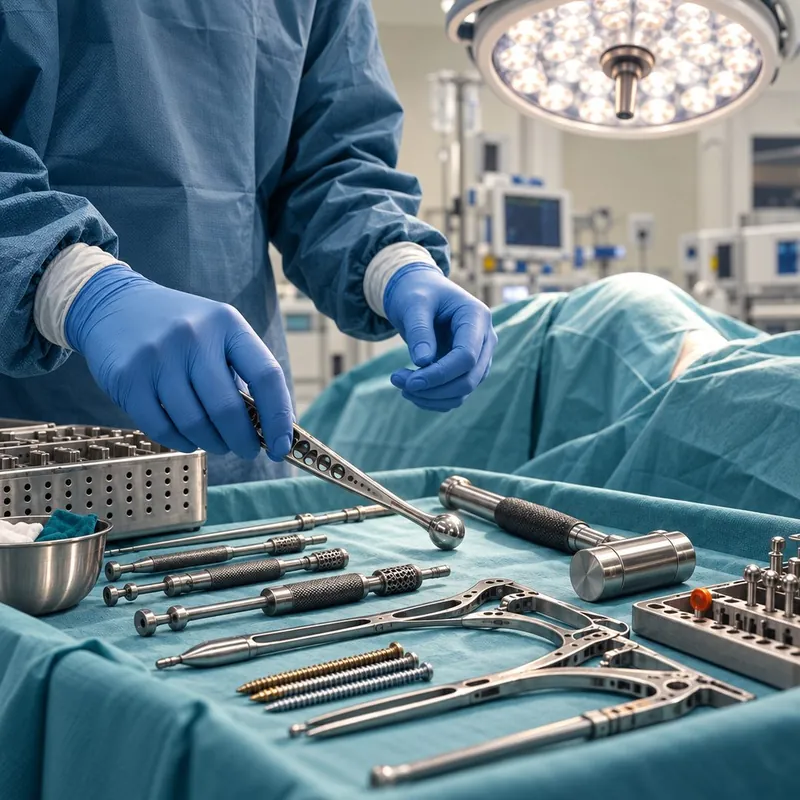
An unstable fracture, or one compressing the nerves, is treated with spinal fixation — screws and rods to realign and hold the spine — and, where needed, taking pressure off the nerves. Where the spinal cord is injured, Dr. Vishal works alongside the neurosurgery team. The aim is a stable spine, protected nerves, and safe early mobilisation.
Fracture · check the nervesDr. Vishal walks you through the CT and MRI of your spine — whether the fracture is stable (a brace) or unstable (surgery), and whether the nerves are involved. Where the spinal cord is injured, the neurosurgery team leads. With an unstable or nerve-threatening fracture, the decision is careful and time-sensitive.
Recovery depends on whether nerves were involved and whether surgery was needed. This is the typical path for a bony fracture without cord injury.
The spine is protected (brace or after fixation); pain is controlled and safe movement begins under guidance.
Walking and daily activity increase gradually in the brace, avoiding bending and lifting.
As the fracture heals the brace is weaned and physiotherapy strengthens the back and core.
Most bony fractures heal to comfortable daily activity; nerve-involved injuries follow a longer, guided rehabilitation.
With a spine fractured in an accident, protecting the nerves and getting the stability judgement right is everything. Dr. Kumar Vishal is an orthopaedic and trauma surgeon in Ranchi, Jharkhand, practising at Medifirst Hospital, where he is Director. Choosing an orthopaedic surgeon is one of the most important health decisions a family makes — and for thousands across Jharkhand, that choice has been Dr. Vishal.
With more than 13 years of experience and 800+ surgeries performed, he is widely regarded as one of the best orthopaedic surgeons in Ranchi for knee & hip replacement, arthroscopy, sports injuries, arthritis and complex trauma & fracture care. He is fellowship-trained in joint replacement and arthroscopy and has treated over 10,000 patients — including fractures other hospitals had turned away.
What sets him apart is a philosophy of honest, unhurried care — every patient examined personally, given a clear explanation, and told plainly whether surgery is truly necessary, or whether physiotherapy, medication or rest would serve them better.
240+ reviews posted publicly on Google — names shown as they appear there. We never invent testimonials.
"I had a severe sprain in my waist and couldn't move for a few days. I took treatment from Dr. Kumar Vishal, the Director of Medifirst Hospital. A very good experience — I suggest him for anything related to ortho and spine pain, or broken bones."
Read on Google"My thigh bone fractured and the bone had come out. Doctors in Daltonganj said it couldn't be saved. Dr. Vishal treated me at Medifirst — 3–4 surgeries — and today, 15 days after stitch removal, I am walking on my own leg. He is like a god to me."
Read on Google"My brother had a leg fracture. Another hospital kept him in ICU for a week and was running up unnecessary bills. Dr. Vishal read the reports, explained there was no abdomen or head injury, operated on the fracture — and 10 days later my brother is comfortable. His advice is genuine."
Read on GoogleStill have questions? Talk to Dr. Vishal's team — bring your reports, leave with a plan.
This page is general educational information, not a substitute for a personal consultation. Individual results and recovery vary; a treatment plan is decided only after examination.
Get a straight answer on your pain — and a clear plan to fix it. Share your reports or message on WhatsApp, and Dr. Vishal's team helps you book the right time and clinic, often the same day.