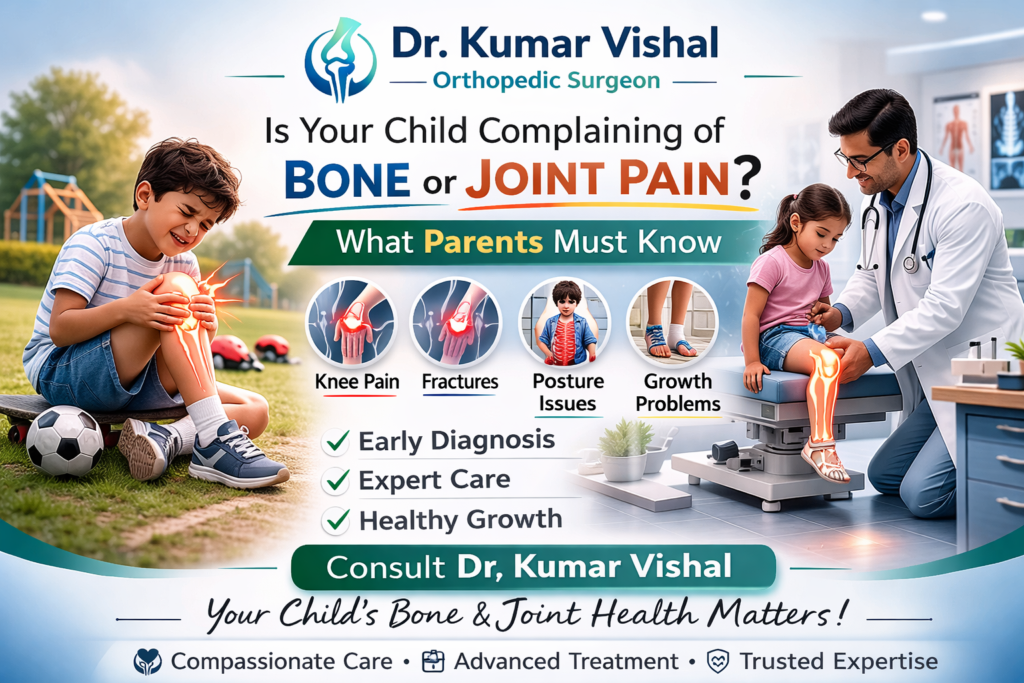
Children are naturally active — running, jumping, and exploring their surroundings every day. Occasional aches and minor discomfort can be part of normal growth. However, when a child repeatedly complains of bone or joint pain, parents should pay closer attention. Persistent pain is not always “just growing pains” and may indicate an underlying orthopedic concern.
Understanding the difference between normal discomfort and warning signs can help parents take timely action.
Are Bone and Joint Pains Normal in Children?
Many parents assume that bone pain is a routine part of childhood. While mild, temporary aches can occur, consistent or severe pain should never be ignored.
What Are Growing Pains?
Growing pains typically:
- Occur in the evening or at night
- Affect both legs (not a single joint)
- Do not cause swelling or stiffness
- Resolve without limiting activity
If pain patterns differ from these characteristics, a medical evaluation becomes important.
When Should Parents Be Concerned?
Certain symptoms may signal pediatric orthopedic problems rather than harmless discomfort.
Persistent or Recurring Pain
Pain lasting weeks or repeatedly returning may indicate structural or inflammatory issues.
Swelling or Redness Around Joints
Visible swelling, warmth, or redness should always be examined by a specialist.
Difficulty Walking or Limping
If your child avoids putting weight on a limb or develops a limp, it may reflect joint or bone abnormalities.
Pain Affecting Daily Activities
Pain that interferes with sports, play, or sleep requires attention.
Common Causes of Bone & Joint Pain in Children
Pediatric orthopedic conditions can arise from various factors. Early diagnosis plays a crucial role in preventing complications.
Injuries and Trauma
Children may experience unnoticed injuries during play. Minor falls can sometimes result in ligament strain or small fractures.
Growth Plate Issues
Since children’s bones are still developing, growth plates are vulnerable to stress and injury.
Postural and Alignment Problems
Improper posture or limb alignment can lead to discomfort, especially in knees and hips.
Congenital Conditions
Some children are born with orthopedic variations that gradually become noticeable.
Inflammatory Conditions
Joint inflammation can produce stiffness, swelling, and persistent pain.
Why Early Evaluation Is Essential
Ignoring bone or joint pain may lead to worsening symptoms or delayed recovery. Pediatric musculoskeletal issues are often easier to manage when detected early.
Timely assessment helps:
- Identify the root cause of pain
- Prevent long-term complications
- Ensure proper bone development
- Reduce recovery time
The Role of a Pediatric Orthopedic Specialist
Children are not simply “small adults.” Their bones, joints, and growth patterns require specialized care.
A pediatric orthopedic specialist focuses on:
- Growth-related bone conditions
- Joint abnormalities
- Pediatric fractures and injuries
- Congenital deformities
- Postural corrections
Parents seeking the Best Pediatric Orthopaedics Surgeon in Ranchi often look for expertise that combines medical precision with child-friendly care.
How Dr. Kumar Vishal Helps Young Patients
When it comes to pediatric orthopedic concerns, experience and a gentle approach are critical. Dr. Kumar Vishal is known for providing comprehensive orthopedic care tailored specifically for children.
Child-Centered Evaluation
Every consultation prioritizes comfort, careful examination, and accurate diagnosis.
Personalized Treatment Plans
Treatment strategies are designed based on the child’s age, growth stage, and specific condition.
Focus on Conservative Care
Whenever possible, non-surgical solutions such as physiotherapy and corrective guidance are recommended.
Advanced Surgical Expertise
For complex conditions, precision-driven surgical care ensures optimal outcomes.
What Parents Can Do at Home
While medical evaluation is important, parents can also take simple steps to monitor and support their child’s orthopedic health.
Observe Pain Patterns
Note when the pain occurs, its intensity, and associated symptoms.
Encourage Open Communication
Children may struggle to describe discomfort clearly. Gentle conversations can reveal useful details.
Avoid Self-Diagnosis
Online information cannot replace professional medical assessment.
When to Seek Immediate Medical Attention
Consult a specialist promptly if your child experiences:
- Severe or worsening pain
- Sudden swelling in joints
- Limping or mobility issues
- Pain following injury
- Pain accompanied by fever
Final Thoughts
Bone and joint pain in children should never be dismissed casually. While some discomfort may be harmless, persistent symptoms can signal conditions requiring expert care.
Early consultation with the Best Pediatric Orthopaedics Surgeon in Ranchi can provide clarity, reassurance, and effective treatment. With the right guidance, most pediatric orthopedic problems can be managed successfully.If your child continues to complain of pain, seeking professional evaluation from Dr. Kumar Vishal can be an important step toward protecting their growth, mobility, and long-term well-being.